 Amélie: Audrey’s Glow, Montmartre’s Charm, Red & Green Magic, and Dussollier’s Velvet Voice
by FPDieulois :: 2025-12-04
with help of xAI Grok
Amélie (2001), Jean-Pierre Jeunet’s whimsical Parisian fairy tale, enchants its way into my 50 favorite films
with a burst of color, kindness, and pure cinematic joy.
While Ridley Scott’s visual splendor crested in Prometheus (2012) before Alien: Covenant’s (2017) stumble,
Jeunet crafts a world where every frame sings.
Audrey Tautou’s luminous Amélie Poulain, the cobblestone poetry of Montmartre, the iconic red-and-green palette,
and André Dussollier’s voluptuous narration weave a dream that feels both intimate and infinite.
Audrey Tautou’s Beauty: A Pixie with a Heart of Gold
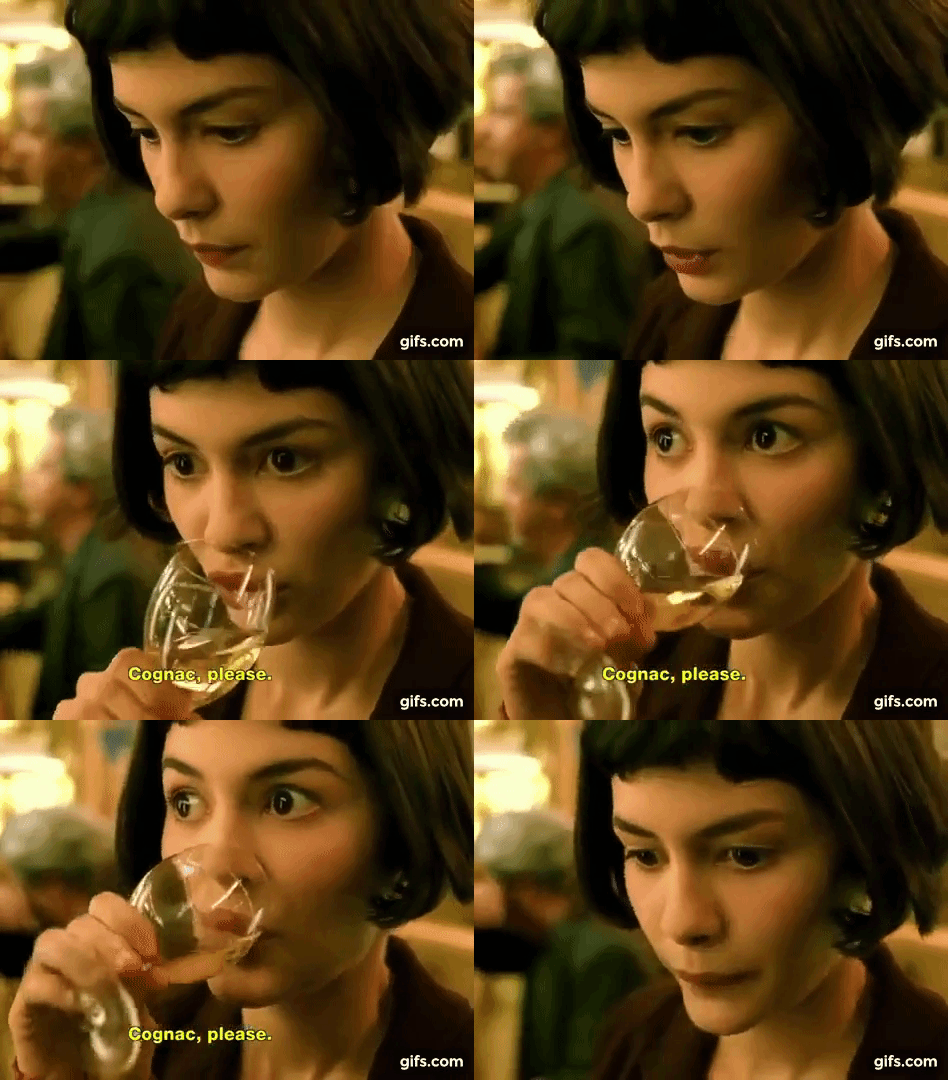
Tautou, at 24, is Amélie incarnate—wide doe eyes, bobbed black hair, a smile that flickers like candlelight.
She’s not just pretty; she’s alive—skipping stones on the canal, crumbling crème brûlée with a spoon, plotting anonymous acts of kindness.
Her beauty is mischievous, fragile, brave: a shy waitress who rewrites lonely lives.
Tautou doesn’t act Amélie—she is her, every blush and giggle a spell cast on the audience.
Montmartre: Paris as a Living Postcard
Jeunet turns the 18th arrondissement into a character—winding streets, the basilica of Sacré-Cœur
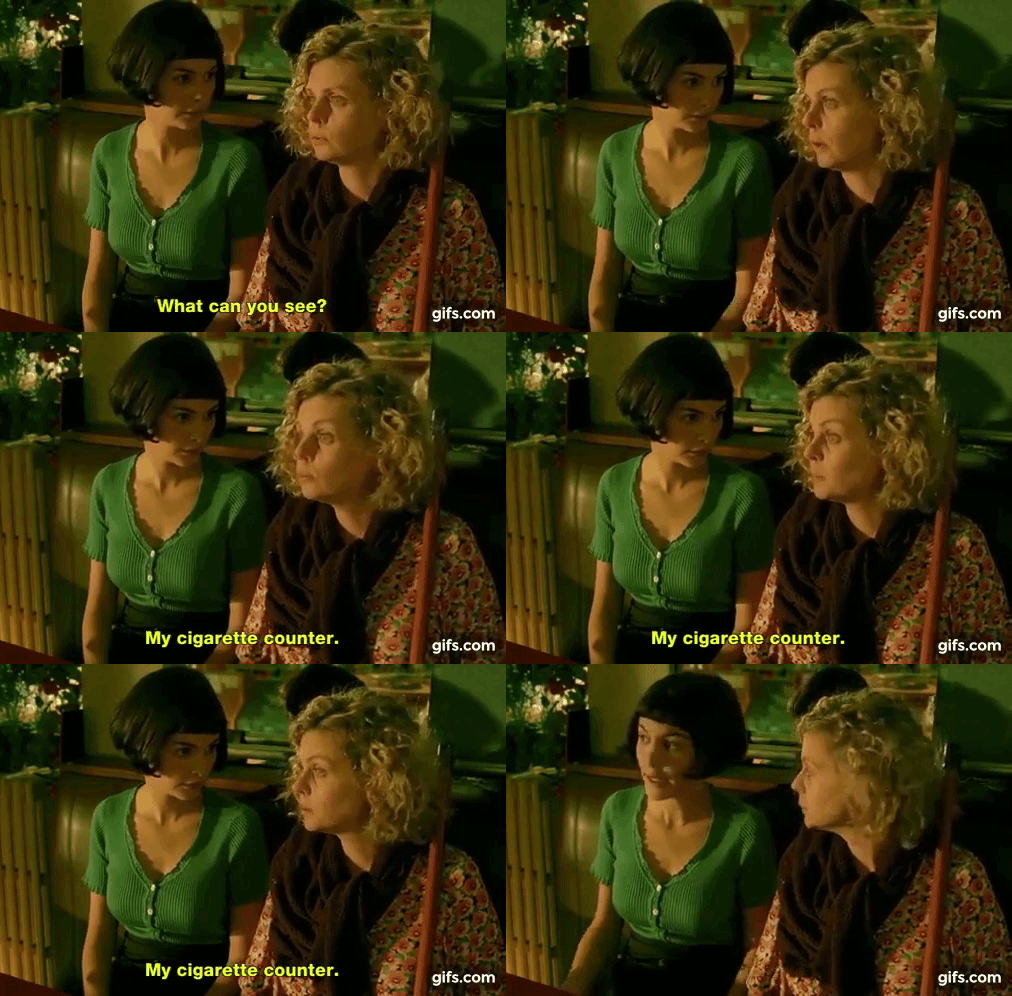
glowing at dawn, the Café des Deux Moulins with its zinc counter and cigarette haze.
Shot by Bruno Delbonnel, every corner is saturated: red awnings, green shutters, golden light spilling over cobblestones.
The metro station Abbesses, the carousel at dusk, the traveling gnome—it’s Paris distilled into pure nostalgia, a village where magic hides in plain sight.

Red & Green: The Film’s Chromatic Heartbeat
Jeunet and Delbonnel paint with intention: red for passion, danger, love (Amélie’s dress, the photo booth curtains, the beating heart in the opening credits);
green for growth, envy, hope (the garden gnome, the metro tiles, Amélie’s apartment walls).
The colors clash and caress—red apples in a green bowl, green eyes behind red glasses—creating visual rhythm.
Even the blind man’s scarf is red and green, a signal of Amélie’s quiet revolution.
André Dussollier’s Voluptuous Voice: The Narrator as God of Whimsy
Dussollier’s narration—warm, conspiratorial, slightly amused—wraps the film like velvet. He doesn’t just tell;
he savors: “Amélie Poulain… prefers to cultivate a certain… discretion.”
His voice dips and soars, turning mundane details (a skipped stone, a lost album) into poetry.
It’s the sound of a wise uncle revealing secrets, making the fantastical feel true.
Jeunet, co-writing with Guillaume Laurant, builds a universe of quirks: glass men, traveling gnomes, failed writers, lonely painters.
Yann Tiersen’s accordion waltz score dances through it all. Amélie doesn’t save the world—she saves people, one small miracle at a time.
Tautou’s glow, Montmartre’s charm, red-and-green alchemy, and Dussollier’s lush voice create a film that feels like falling in love with life itself.
with help of Google Gemini
< B > My Personal Blog < B > List of all my Blog posts < B >
Article generated & inserted in SQL tables by AIs

FREDDY FRANCE Blog personnel
(c)FPe COPYRIGHT @FPDIEULOIS 2026