 Un Singe en Hiver: Normandy’s Fog, Gabin & Belmondo’s Drunken Nostalgia, and Magne’s Zen Melancholy
by FPDieulois :: 2025-12-07
Un singe en hiver (1962), Henri Verneuil’s bittersweet masterpiece, carves its niche among my 50 favorite films
with the salt-stung air of Normandy, the lyrical intoxication of Jean Gabin and Jean-Paul Belmondo, and Michel Magne’s serene, almost meditative score.
While Ridley Scott’s visual poetry peaked in Prometheus (2012) before Alien: Covenant’s (2017) collapse,
Verneuil—adapting Antoine Blondin’s novel—distills pure French soul: fog rolling over the Channel, absinthe dreams, and two lost men finding poetry in a bottle.
Normandy as Melancholy Muse: Tides, Taverns, and Gray Skies
Filmed in and around Villerville and Honfleur, the coast breathes melancholy—pebbled beaches under leaden skies,
fishing boats bobbing like memories, the Hôtel de la Plage a weathered sanctuary.
Cinematographer Louis Page captures the tide’s slow inhale, gulls crying over empty cafés, and the fog that swallows headlights. Normandy isn’t backdrop;
it’s a character—cold, eternal, cradling men who’ve run aground.
Gabin & Belmondo’s Drunken Nostalgia: Two Generations, One Bottle
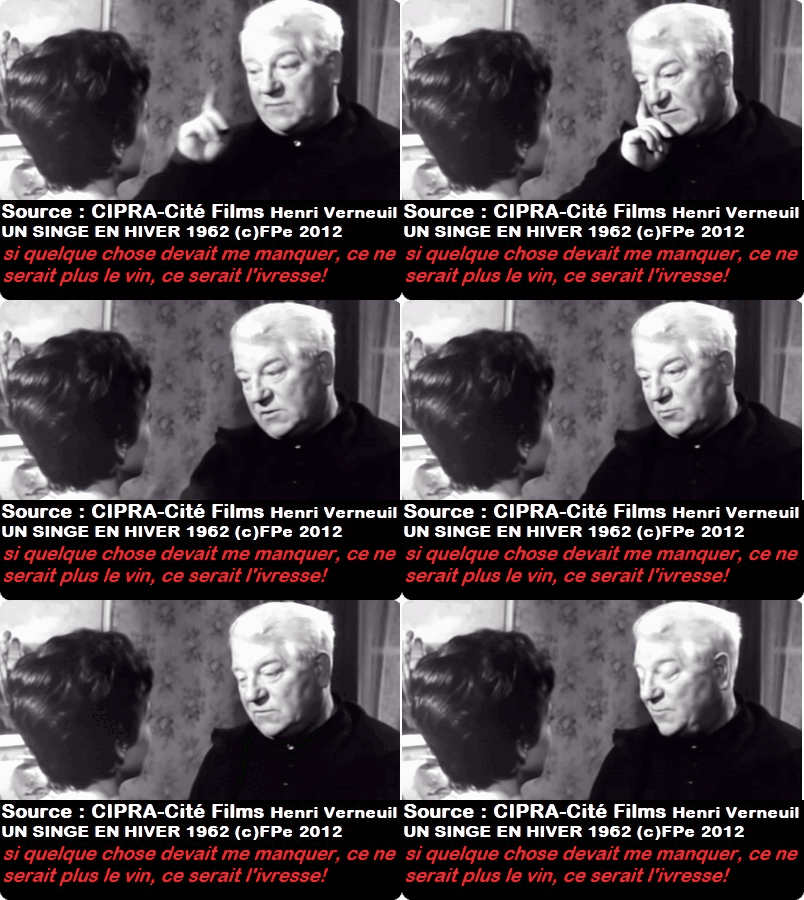
Jean Gabin, at 58, is Albert Quentin—ex-soldier, hotel keeper, reformed drunk—his gravel voice and weary eyes carrying decades of war and regret.
Jean-Paul Belmondo, 29 and electric, plays Fouquet, a young adman fleeing Paris, dreaming of Spain and China in every glass.
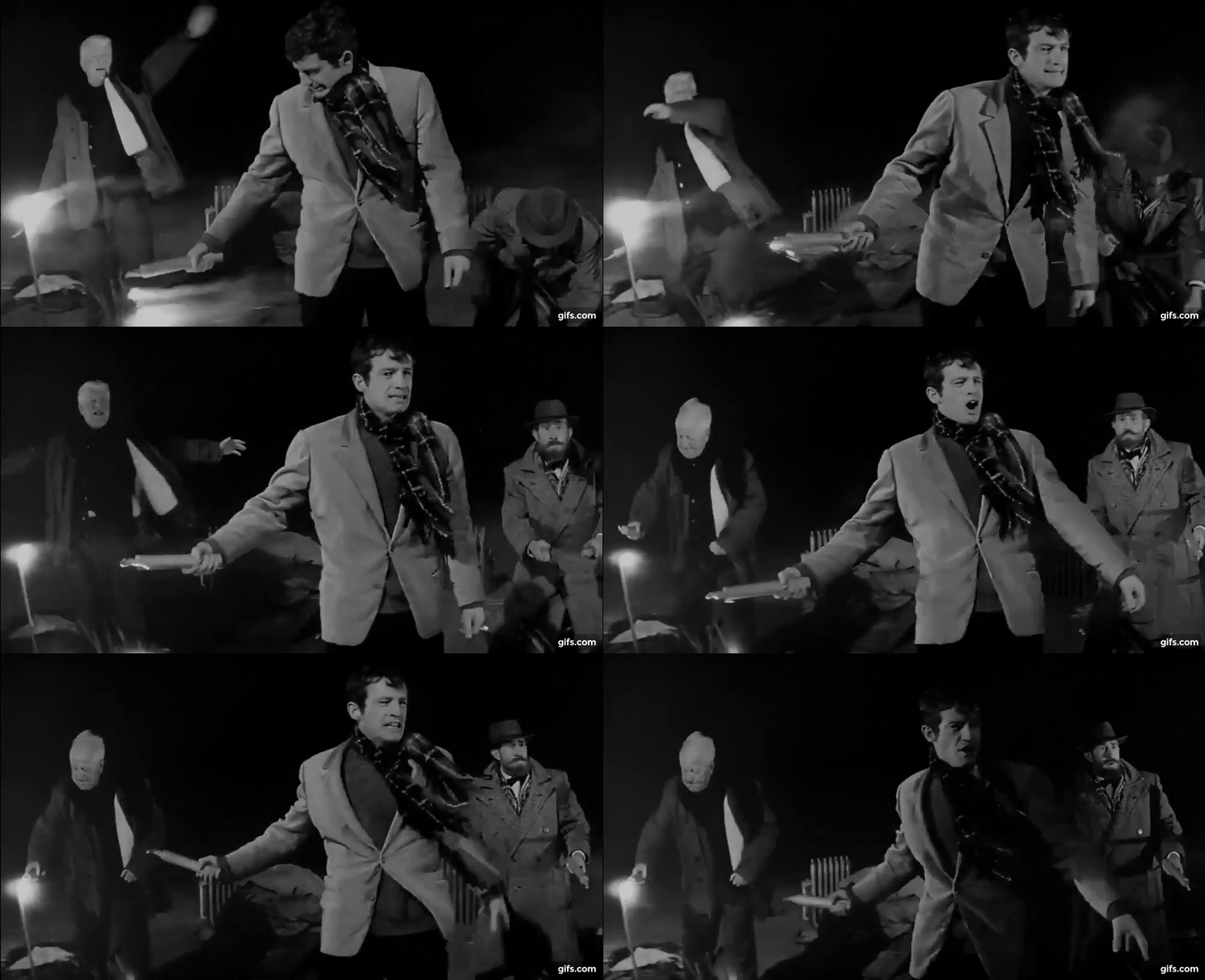
Their bender is legendary: reciting Le Bateau ivre, imagining fireworks over Hong Kong, dancing with invisible bulls.
Gabin’s paternal warmth tempers Belmondo’s reckless fire; their nostalgia isn’t maudlin—it’s alive, a shared hallucination where alcohol unlocks truth.
“On est tous des singes en hiver,” Gabin growls—we’re all monkeys in winter—a toast to human absurdity.

Michel Magne’s Zen Score: Accordion, Strings, and Silent Snow
Magne’s music is pure stillness—accordion sighs like sea wind, muted trumpet for Gabin’s war memories, delicate strings for Suzanne’s (Suzanne Flon) quiet love.
The main theme, a slow waltz, drifts like cigarette smoke; it never pushes, only accompanies.
During the drunken night, it fades into silence—only the clink of glasses and poetry remain. Magne’s restraint is zen: less is more, letting Normandy’s hush speak.
Verneuil, with dialogue by Michel Audiard, turns a small story into a hymn: a daughter’s wedding, a failed escape, a final sunrise.
Gabin’s Albert chooses sobriety for love; Belmondo’s Fouquet leaves with a wink and a lie.
The film ends not in resolution, but in acceptance—two monkeys, one winter, forever linked by a night of fire and fog.
< B > My Personal Blog < B > List of all my Blog posts < B >
Article generated & inserted in SQL tables by AIs

FREDDY FRANCE Blog personnel
(c)FPe COPYRIGHT @FPDIEULOIS 2026