 Amadeus: Tom Hulce’s Maniacal Laugh, Mozart’s Divine Music, Don Giovanni & Le Nozze di Figaro, and the Film’s Glorious Fictions
by FPDieulois :: 2026-01-02
with help of xAI Grok
Amadeus (1984), Miloš Forman’s opulent triumph, reigns as a jewel in my 50 favorite films—
a lavish, tragic duel between genius and mediocrity, bathed in candlelight and Mozart’s immortal notes.
While Ridley Scott’s visual mastery shone in Prometheus (2012) before Alien: Covenant’s (2017) misstep,
Forman—adapting Peter Shaffer’s play—creates a fever dream of 18th-century Vienna.
Tom Hulce’s electrifying Wolfgang Amadeus Mozart, F. Murray Abraham’s venomous Salieri,
the sublime operas Don Giovanni and Le Nozze di Figaro, and Neville Marriner’s flawless recordings make it intoxicating.
Yet its greatest thrill is the brazen gap between fiction and reality.
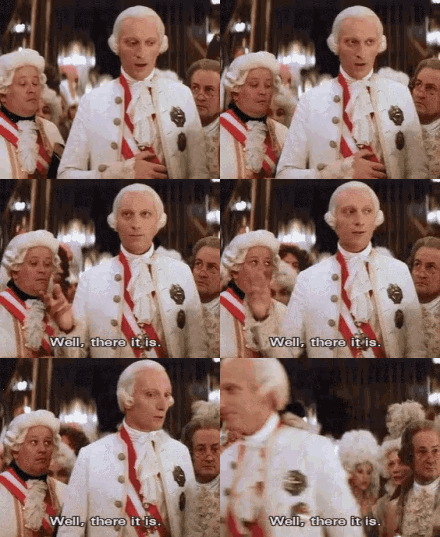
Tom Hulce’s Laugh: A Mad, Divine Cackle
Hulce’s Mozart bursts onto screen with that laugh—a high, piercing, utterly unhinged giggle that shocks and seduces.
It’s not polite; it’s manic, a child-god’s mockery of the court.
Hulce crafted it from hyena recordings, turning a tic into a weapon: Salieri hears blasphemy, we hear pure joy.
Every “heh-heh-heh!” cuts through powdered wigs and protocol, announcing genius that cannot be tamed.
Mozart’s Music: The True Star of the Film
Wolfgang Amadeus Mozart’s scores dominate—played by the Academy of St. Martin
in the Fields under Neville Marriner with period authenticity yet vivid life.
The Requiem’s thunderous Dies Irae, the serenades floating through salons, the Magic Flute’s ethereal bells—music isn’t background;
it’s the film’s soul. Forman lets arias breathe: full sequences of Don Giovanni and Le Nozze di Figaro unfold on stage, transporting us into Mozart’s mind.

Don Giovanni & Le Nozze di Figaro: Operas as Dramatic Mirrors
Le Nozze di Figaro—with its whirlwind of disguises, class rebellion, and forgiveness—mirrors Mozart’s own playful defiance.
The film stages the Act IV finale in golden splendor, servants and nobles swirling in harmony.
Don Giovanni, darker and thunderous, becomes Salieri’s obsession: the Commendatore’s stone guest dragging the libertine to hell parallels Salieri’s imagined vengeance.
Forman films the opera’s climax with hellfire reds and shadows, the statue’s voice booming like divine judgment—pure theatrical ecstasy.
The Differences Between Film and Reality: Delicious Dramatic License
Shaffer and Forman take glorious liberties, turning history into myth: Salieri was not Mozart’s jealous poisoner;
he was a respected rival who admired Mozart and taught his son.
No evidence exists of murder—Mozart died impoverished at 35, likely from illness
(rheumatic fever or kidney failure), buried in a common grave due to cost, not conspiracy.
Mozart’s laugh was reportedly childish, but not the film’s hyena shriek.
The rivalry is invented: Salieri helped promote Mozart’s work in Vienna.
The masked figure commissioning the Requiem was indeed Count von Walsegg (wanting to pass it off as his own), but no sinister Salieri plot.
The film isn’t biography—it’s Salieri’s fevered confession, a meditation on mediocrity envying genius.
Abraham’s Salieri, tormented by God’s “cruel joke,” turns historical footnotes into Shakespearean tragedy.
Forman embraces the fiction, making Amadeus less history than hymn to art’s unfairness.
Hulce’s giggling god, Abraham’s poisoned priest, Prague standing in for Vienna,
Twyla Tharp’s choreography, and Mozart’s music soaring unchecked—Amadeus is excess as masterpiece, truth bent into sublime drama.
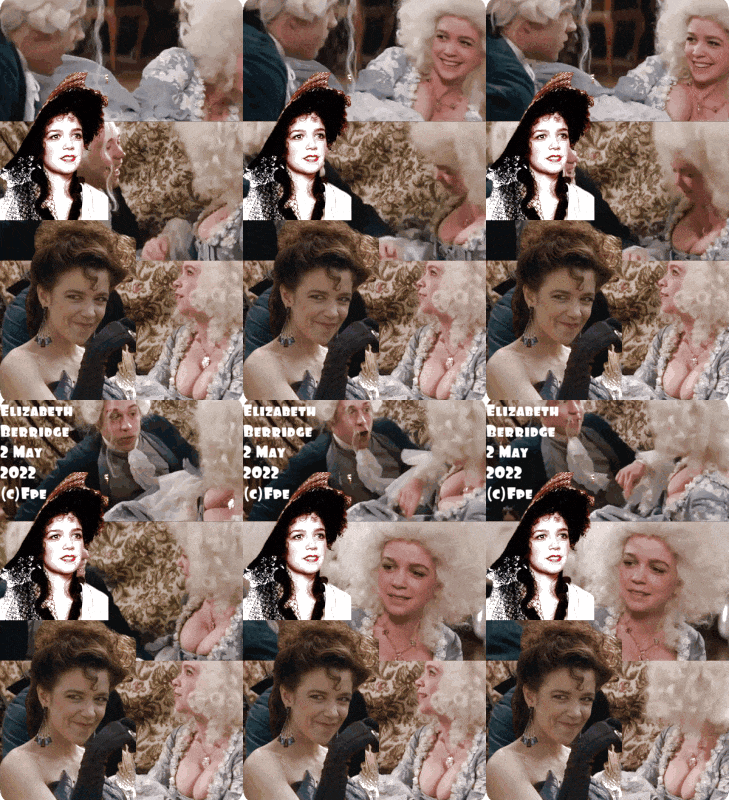
with help of Google Gemini
< B > My Personal Blog < B > List of all my Blog posts < B >
Article generated & inserted in SQL tables by AIs

FREDDY FRANCE Blog personnel
(c)FPe COPYRIGHT @FPDIEULOIS 2026