 The Last Samurai: Zimmer’s Epic Score, Koyuki’s Grace, Japan’s Hidden Beauty, Cherry Blossoms & Samurai Soul
by FPDieulois :: 2026-01-04
with help of xAI Grok
The Last Samurai (2003), Edward Zwick’s sweeping historical epic, claims its place among my 50 favorite films
with a reverent portrait of a vanishing Japan, where honor clashes with modernity.
While Ridley Scott’s visual grandeur peaked in Prometheus (2012) before Alien: Covenant’s (2017) disappointment,
Zwick—working from a story co-written with Tom Cruise and John Logan—delivers a respectful, if romanticized, ode to bushido.
Hans Zimmer’s thunderous yet tender score, Koyuki’s serene beauty, the lesser-seen Japan of blooming sakura and mountain villages,
the noble samurai spirit, and young Higen’s quiet journey toward courage make it unforgettable.
Hans Zimmer’s Score: Thunder, Silence, and Heart
Zimmer’s music is the film’s pulse—taiko drums pounding like war hearts,
shakuhachi flutes whispering melancholy, strings soaring over snow-capped peaks.
The main theme, with its rising cello and choral swells, captures both battle fury and spiritual calm.
From the quiet koto notes during training montages to the explosive “Red Warrior” in combat,
Zimmer blends Western orchestra with Japanese instruments, creating a sound that feels ancient yet cinematic.
It’s not mere accompaniment—it’s the soul of a dying era.

Koyuki’s Beauty: Quiet Strength in a Storm
Koyuki, as Taka—the widowed sister of a samurai Cruise’s Nathan Algren killed—radiates understated grace.
Her porcelain features, dark eyes holding oceans of grief and resilience, embody traditional Japanese femininity.
She doesn’t speak much, yet every gesture—preparing tea, dressing Algren’s wounds, shielding her children
—conveys dignity. Her evolving bond with Algren, from silent hatred to mutual respect and unspoken love,
is the film’s emotional anchor. Koyuki’s beauty isn’t flashy; it’s the quiet bloom that survives winter.
Japan’s Hidden Beauty: Cherry Blossoms and a Vanishing World
The film unveils a Japan rarely seen in Western cinema: not Tokyo’s bustle, but remote mountain villages,
mist-shrouded forests, and Kyoto’s temples framed by sakura petals drifting like snow.
Cinematographer John Toll paints spring in soft pinks and whites—cherry trees in full bloom
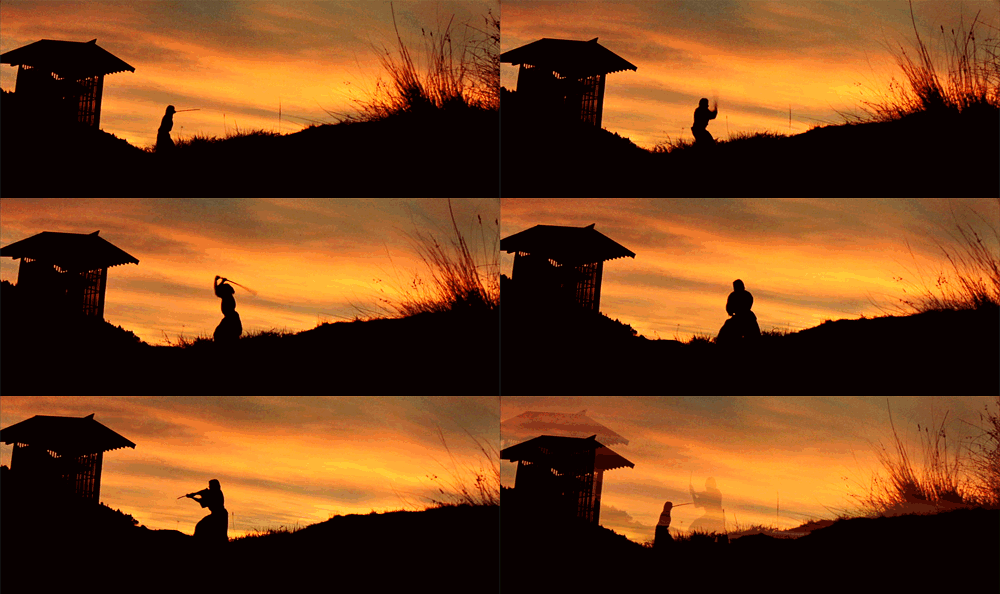
during Algren’s captivity, petals falling like fleeting life during sword practice.
Autumn leaves burn red in battle; winter snow blankets silence.
It’s a Japan of tatami homes, lantern-lit nights, and sacred stillness—a culture on the brink, romantic yet tangible.
The Samurai Spirit: Honor Beyond the Sword
Ken Watanabe’s Katsumoto is the film’s moral center—his calm authority, poetic wisdom, and unwavering bushido embodying the samurai ideal.
The warriors aren’t cartoon heroes; they’re men facing obsolescence with dignity. Training sequences—Algren’s humiliating defeats,
his gradual mastery of the katana—show discipline as spiritual path.
The final charge against modern rifles isn’t victory; it’s a beautiful, tragic affirmation: “perfect…
like cherry blossoms.
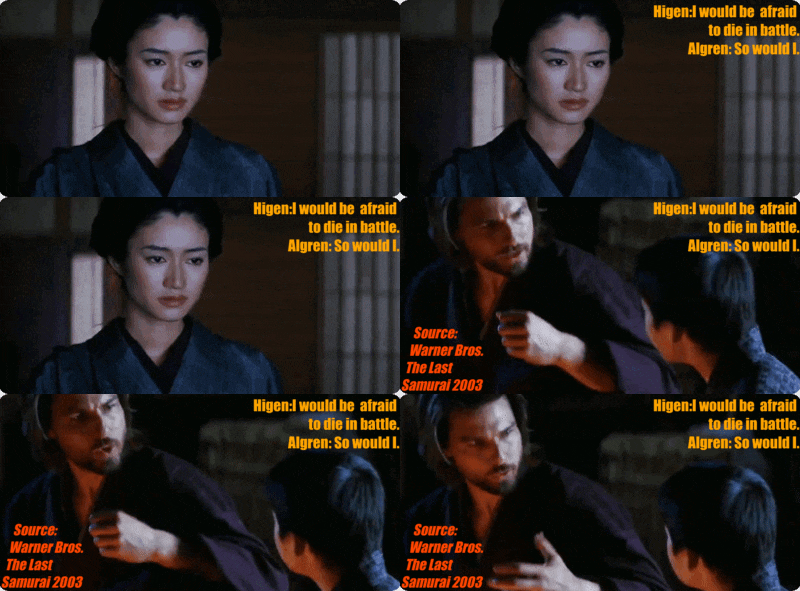
”Higen’s Lesson in Courage: A Boy Becomes a Man
Young Sosuke Ikematsu plays Higen, Taka’s son, who begins timid—fleeing Algren in fear, ashamed of his father’s death.
Algren, haunted by his own past, becomes his unlikely mentor: teaching swordplay, sharing silence, earning trust.
Higen’s growth is subtle—his first strike, his tearful farewell, his final stand with a wooden bokken against soldiers.
It’s a quiet arc of inherited courage: a boy learning that bravery isn’t the absence of fear, but acting despite it.
Zwick, filming in New Zealand and Japan with meticulous costume and choreography,
crafts an outsider’s love letter—flawed by its white-savior lens, yet sincere in reverence.
Cruise’s Algren finds redemption; Watanabe’s Katsumoto finds peace. Zimmer’s music swells,
petals fall, and a boy raises his sword—The Last Samurai is spectacle with soul.
with help of Google Gemini
< B > My Personal Blog < B > List of all my Blog posts < B >
Article generated & inserted in SQL tables by AIs

FREDDY FRANCE Blog personnel
(c)FPe COPYRIGHT @FPDIEULOIS 2026