 Raphael, Leonardo, and Michelangelo: The Legendary Rivalry of the Renaissance Titans
by FPDieulois :: 2026-01-22
with help of xAI Grok
The Italian Renaissance was not just an explosion of art, beauty, and humanism – it was also a battlefield of egos, ambitions, and genius.
At its heart stood three titans: Leonardo da Vinci (1452–1519), Michelangelo Buonarroti (1475–1564), and Raphael Sanzio (1483–1520).
Their paths crossed in Florence and Rome under the patronage of powerful figures
like Pope Julius II, creating one of the most intense artistic rivalries in history.
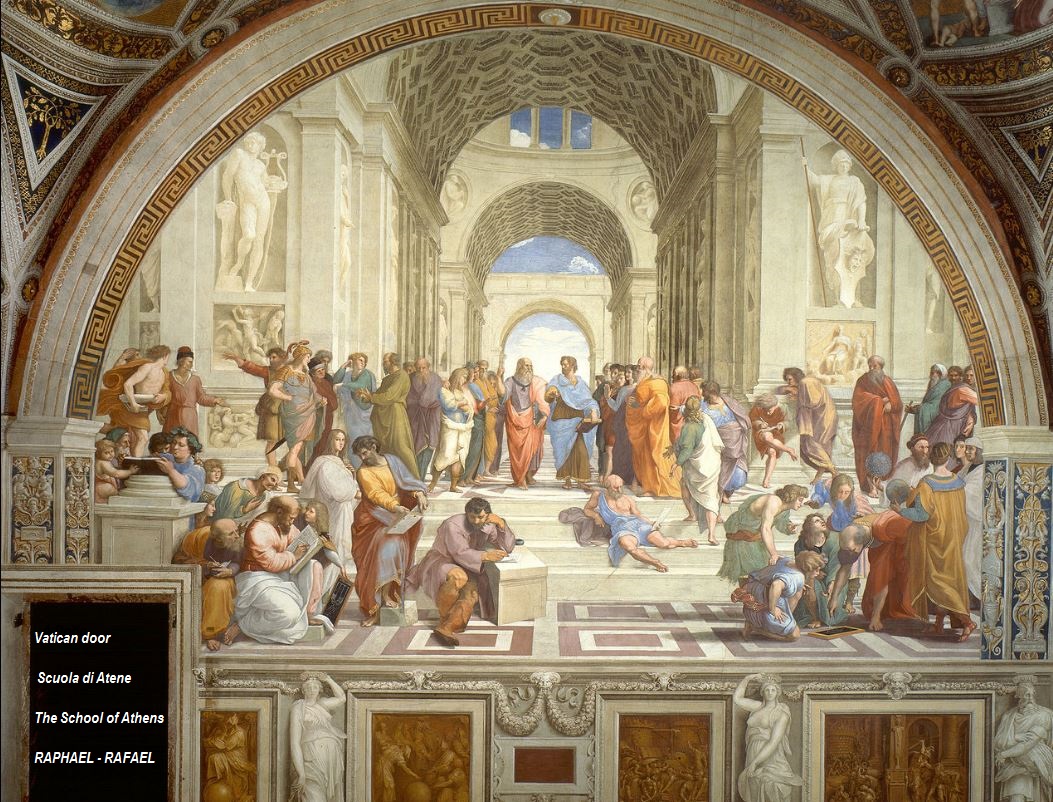
This article explores that rivalry through two iconic works: Raphael's masterpiece
The School of Athens (1509–1511) in the Vatican, and the 1832 history painting Raphael at the Vatican by Horace Vernet,
which dramatizes a fictional (or semi-legendary) encounter between Raphael and Michelangelo.

The Three Giants and Their Clashing Worlds
Leonardo da Vinci
The ultimate polymath: painter, inventor, anatomist, scientist.
His works like the Mona Lisa and The Last Supper embodied mystery, sfumato (soft blending), and intellectual depth.
By the early 1500s, he was already legendary but often aloof and slow to finish projects.
Michelangelo Buonarroti – Sculptor first, then painter and architect.
Known for his superhuman strength, fiery temper, and muscular figures, he saw himself as a divine instrument.
His David (1504) and the Sistine Chapel ceiling (1508–1512) redefined human form and drama.
Raphael Sanzio – The youngest, the most graceful. From Urbino, he brought harmony, clarity, and effortless beauty.
His style synthesized Leonardo's softness and Michelangelo's power into perfect balance.
He was charming, diplomatic, and rapidly successful – which made him a threat to the older masters.
The rivalry was fueled by competition for commissions, especially under Pope Julius II ("the Warrior Pope"), who transformed Rome into a Renaissance capital.
Michelangelo resented Raphael's quick rise and popularity. Leonardo, older and more detached, influenced both but clashed with Michelangelo's explosive personality.
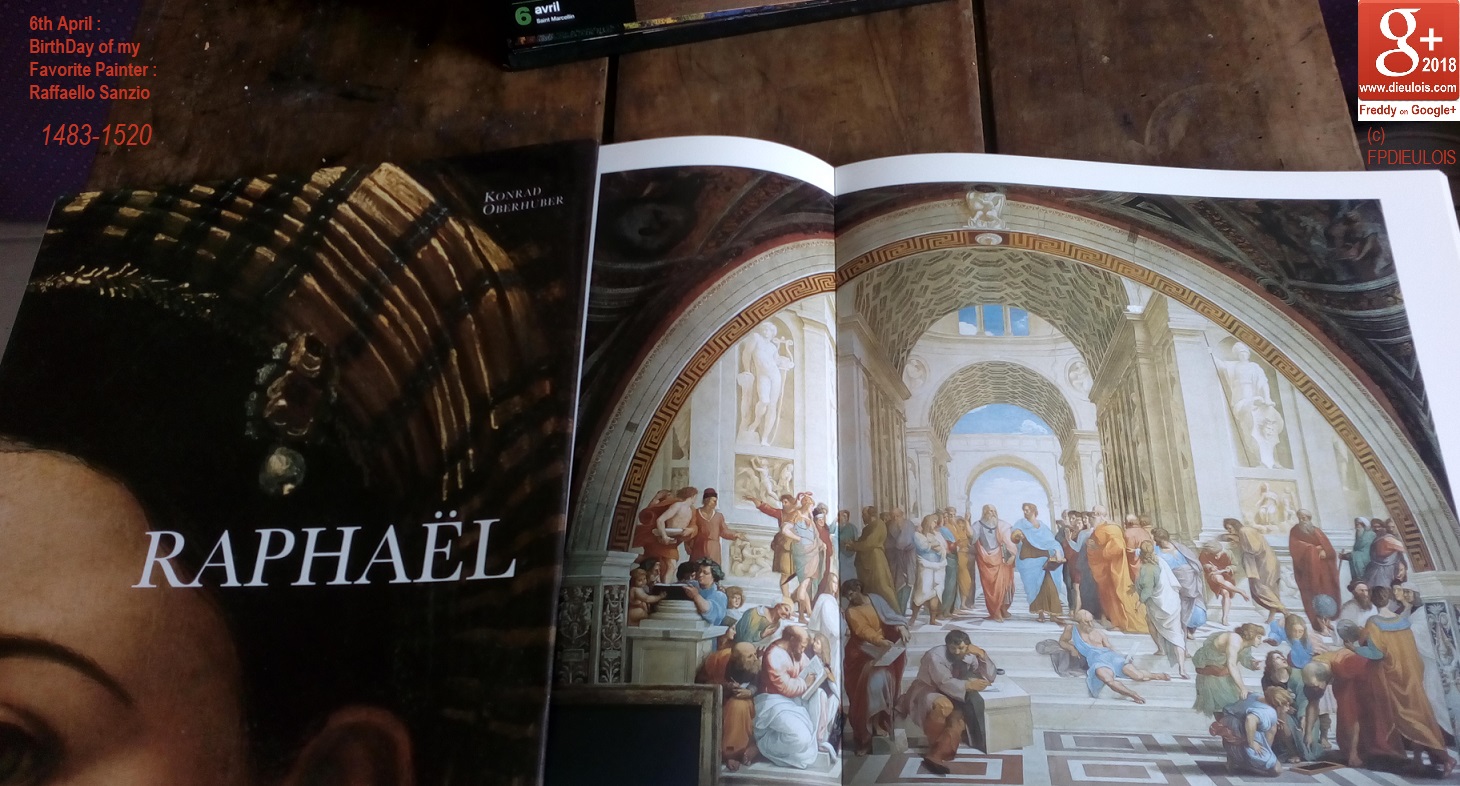
The School of Athens: Raphael's Masterpiece – and a Subtle Jab Painted in the Stanza della Segnatura (one of the Raphael Rooms in the Vatican Apostolic Palace),
The School of Athens is a monumental fresco celebrating philosophy and classical wisdom.
In an architectural hall inspired by Bramante's designs for St. Peter's, dozens of ancient thinkers gather:
Plato and Aristotle at the center, debating idealism vs. empiricism.But Raphael inserted his contemporaries into this timeless scene:
Plato (pointing upward) bears the unmistakable face of Leonardo da Vinci – bearded, wise, holding a book like the Timaeus.
This was a clear tribute to Leonardo's intellectual supremacy and perhaps his influence on Raphael (who may have seen the Mona Lisa early).
Heraclitus (the brooding, isolated philosopher leaning on a marble block, writing) is unmistakably Michelangelo.
Added late (after Raphael secretly viewed the Sistine Chapel ceiling), this figure reflects Michelangelo's reputation as grumpy, solitary, and temperamental.
Heraclitus, the "weeping philosopher" known for pessimism and scorn of rivals, was a pointed choice.
Scholars debate if it was homage, mockery, or both – but Michelangelo reportedly hated it.

Raphael placed himself in the scene too (far right, looking out at us with a black beret), claiming his place among the greats.
The fresco symbolizes harmony, yet it subtly encodes the real-life tensions: Leonardo as the elevated idealist,
Michelangelo as the dark outsider, Raphael as the synthesizer who outshone them in public favor.
Michelangelo, working nearby on the Sistine ceiling, felt threatened.
He accused Raphael of plagiarism and spying. Raphael, in turn, absorbed Michelangelo's dynamic figures into his own graceful style, infuriating the older artist further.Horace Vernet's 1832 Painting:
Raphael at the Vatican – Romanticizing the Encounter
Fast-forward to 1832: French Romantic painter Horace Vernet (1789–1863) created a large historical canvas titled Raphael at the Vatican (now in the Louvre, Paris).
Measuring nearly 4 × 3 meters, it imagines a dramatic confrontation in the Vatican between Raphael and Michelangelo.
In Vernet's composition:Raphael, young and elegant, stands confidently amid his frescoes.
Michelangelo, older and intense, confronts him – perhaps accusing him of theft or rivalry.
Pope Julius II and other figures watch, emphasizing the papal patronage that fueled their competition.
Vernet romanticizes the rivalry as a clash of titans: the graceful prodigy vs. the tormented genius.
Though fictionalized (no historical record confirms such a direct meeting), the painting captures 19th-century fascination with Renaissance drama.
It turns the real tensions – jealousy, spying on works-in-progress, accusations of copying – into a theatrical spectacle.Legacy of the Rivalry
The competition pushed all three to greatness:
Leonardo's intellectual legacy influenced Raphael's harmony.
Michelangelo's power shaped Raphael's later figures.
Raphael's balance made him the "prince of painters" in his lifetime.
Raphael died young (1520, age 37), mourned across Rome. Michelangelo outlived them both, grumbling about Raphael's "theft" even in old age.
Leonardo, in France, faded quietly.Yet The School of Athens remains the ultimate symbol: a vision of unity amid real discord.
Raphael paid tribute to his rivals while subtly asserting his superiority – a masterstroke of art and psychology.
In the end, the rivalry wasn't destructive – it was creative fuel.
The Renaissance needed all three: Leonardo's mind, Michelangelo's fire, Raphael's grace.
Together, they defined an era.
with help of Google Gemini
< B > My Personal Blog < B > List of all my Blog posts < B >
Article generated & inserted in SQL tables by AIs

FREDDY FRANCE Blog personnel
(c)FPe COPYRIGHT @FPDIEULOIS 2026