 The Notebook: Romantic Lake with Swans, Time’s Passage Across Two Couples & Rachel McAdams’ Irresistible Charm
by FPDieulois :: 2026-01-27
with help of xAI Grok
The Notebook (2004), Nick Cassavetes’ tender adaptation of Nicholas Sparks’ novel, endures as one of the most heartfelt entries in my 50 favorite films
—a timeless love story wrapped in Southern summers, enduring vows, and the cruel fog of memory.
While Ridley Scott’s visual mastery peaked in Prometheus (2012) before Alien: Covenant’s (2017) stumble, Cassavetes
—guided by a script from Jeremy Leven and the Jan Sardi—creates a film that balances sweeping romance with quiet tragedy.
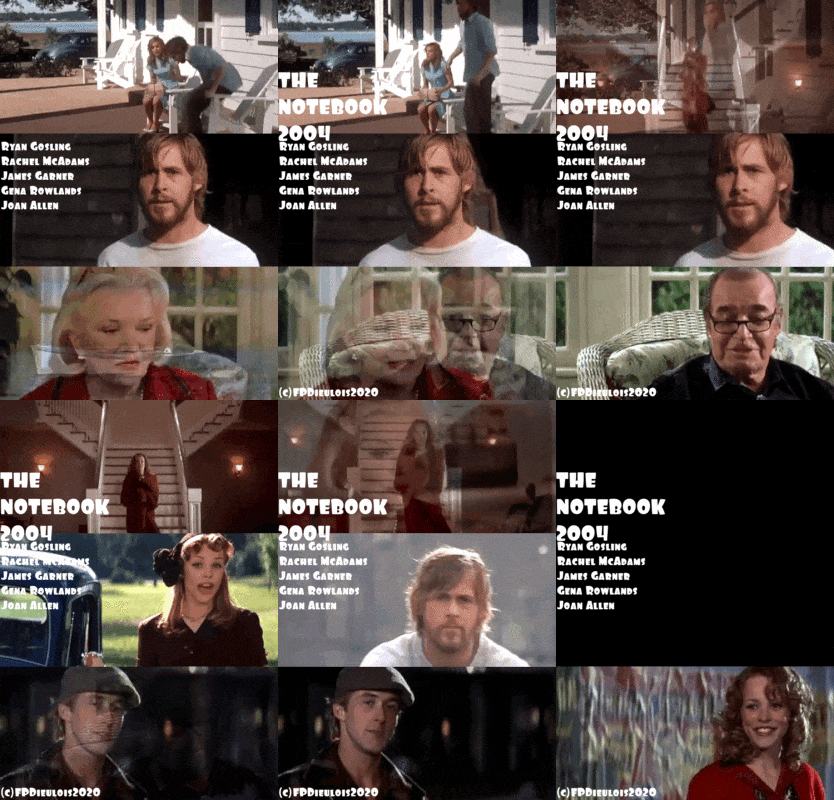
Rachel McAdams’ radiant young Allie, the iconic lake scenes alive with swans,
the parallel lives of two couples separated by decades, and the heartbreaking grip of Alzheimer’s make it a tear-soaked classic.
The Romantic Lake and Its Swans: A Place of Magic and Renewal
The heart of the film beats on the lake—Seabrook’s serene waters where Noah (Ryan Gosling) rows Allie (McAdams) in a small boat under gathering storm clouds.
Swans glide around them, white against the darkening sky, symbolizing pure, graceful love.

As rain pours, Allie sheds her inhibitions—hair wet, arms open, laughing in freedom—while Noah rows with joyful determination.
The scene, drenched in golden-hour light and then storm-gray drama, is pure romantic alchemy: nature itself blesses their union.
Swans return later, circling the restored house, eternal witnesses to a love that time cannot erase.
Time Passing with Two Couples: Youth and Age Intertwined
The narrative weaves two timelines: 1940s passion between young Noah and Allie, and 2000s tenderness between elderly Duke (James Garner) and Allie (Gena Rowlands).
Duke reads from “the notebook” to his wife, whose memory fades, recounting their own story—class divides, war, separation, reunion, marriage, children.
The parallel lives show love’s endurance: the same couple, separated by decades, yet still holding hands in the nursing home.
Garner’s gentle voice and Rowlands’ flickering recognition create a poignant mirror—youth’s fire reflected in age’s quiet embers.

The Disease of Alzheimer’s: Cruelty Amid Eternal Love
Alzheimer’s is the film’s shadow—Allie’s mind erases the very story that defines her.
Moments of clarity are miracles: she remembers Duke is Noah, they share one perfect night of dancing and laughter before the fog returns.
The final scene—both choosing to die together as the disease claims them—turns tragedy into transcendence.
Cassavetes handles the condition with respect, never sensationalizing; it’s a cruel thief, yet love proves stronger, even when memory fails.
Rachel McAdams’ Charm: Youthful Fire and Grace
McAdams, at 25, is luminous as Allie—vibrant, spirited, intelligent.
Her charm lies in contrasts: debutante poise melting into wild joy on the Ferris wheel, fierce arguments in the rain,
tender vulnerability in the lake boat. She’s not just beautiful; she’s alive—eyes sparkling with mischief,
smile infectious, voice carrying both defiance and longing.
McAdams makes Allie feel real: a woman torn between duty and heart, yet brave enough to choose love.
Aaron Zigman’s score swells with emotion, James Horner’s themes echo longing, and the rain-kissing scene seals the film’s legend.
The Notebook isn’t flawless—it leans into sentiment—but its romance, swans on the lake, time’s gentle passage,
Alzheimer’s honest pain, and McAdams’ irresistible glow make it a love letter that still makes hearts ache.
with help of Google Gemini
< B > My Personal Blog < B > List of all my Blog posts < B >
Article generated & inserted in SQL tables by AIs

FREDDY FRANCE Blog personnel
(c)FPe COPYRIGHT @FPDIEULOIS 2026