 Female Painters in Impressionism: Berthe Morisot, Mary Cassatt & the Pioneering Women
 by FPDieulois :: 2026-02-20
with help of xAI Grok
Impressionism, born in the 1870s in Paris, is often remembered through the lens of male artists like Monet, Renoir, Degas, and Pissarro.
Yet women played a vital role from the very beginning.
Despite societal barriers—limited access to formal training, public exhibitions, and independent life
—several remarkable female painters joined the movement, exhibited in the famous Impressionist shows, and brought fresh perspectives to light, color, and everyday life.
The four most celebrated "Women Impressionists" are Berthe Morisot, Mary Cassatt, Eva Gonzalès, and Marie Bracquemond.
Others, like Anna Boch (Belgium) and Laura Muntz Lyall (Canada/UK), extended the influence across Europe.
Their works often explored domestic scenes, motherhood, and women's inner worlds
—subjects that male Impressionists rarely depicted with the same intimacy.
Berthe Morisot: The First Lady of Impressionism and Her Daughter Julie
Berthe Morisot (1841–1895) was the only woman to exhibit in all but one of the eight Impressionist exhibitions.
Born into a cultured bourgeois family, she trained under Camille Corot and became Édouard Manet's sister-in-law
after marrying his brother Eugène in 1874.
Morisot's style—loose brushwork, luminous light, and intimate domestic scenes—made her a core figure in the movement.
Her daughter Julie Manet (1878–1966) was her favorite model and muse. Julie appears in dozens of paintings from infancy to adolescence:
cradled by her nanny, reading in a chaise lounge, daydreaming at a table, or posing with her greyhound Laërte (a gift from poet Stéphane Mallarmé).
Works like Julie Manet et sa levrette Laërte (1893) and Julie Daydreaming (1894) capture tender,
everyday moments with soft, airy brushstrokes and natural light filtering through windows.
Morisot painted motherhood without idealization—realistic, affectionate, and modern.
After Berthe's early death from pneumonia at 54, Julie became an orphan at 16.
She later married painter Ernest Rouart and preserved her mother's legacy, collecting Impressionist works.
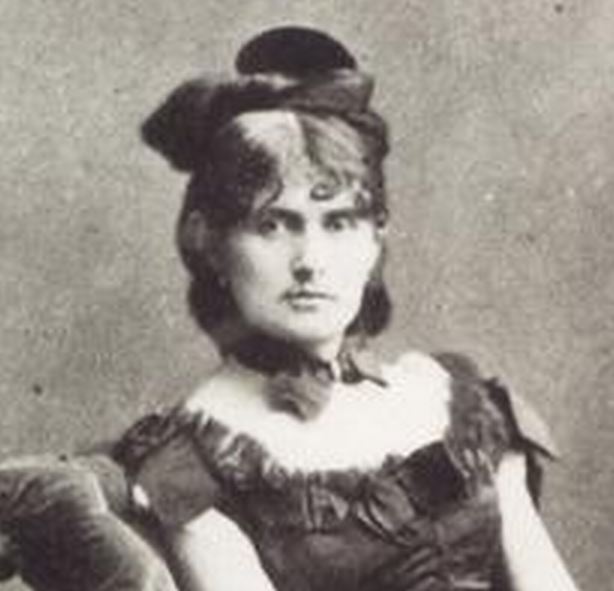
Mary Cassatt: The American Who Redefined Motherhood
Mary Cassatt (1844–1926), the only American in the Impressionist circle, moved to Paris in 1874 and exhibited with the group from 1879 onward.
Influenced by Degas (a close friend) and Japanese prints, she developed a distinctive style: bold compositions, cropped figures, and vibrant pastels.
Cassatt never married or had children, yet her most famous theme is mother and child.
She portrayed intimate, everyday caregiving—bathing, kissing, dressing, reading—with dignity and realism, avoiding sentimentality.
Paintings like The Child's Bath (1891–1892), Mother's Kiss (1896), Maternal Caress (1896), and
Mother and Child (The Oval Mirror) (c.1899) show physical closeness, tender gestures, and the quiet labor of motherhood.
Critics called her "la sainte famille moderne" (the saint of the modern family).
Her works challenged traditional Madonna-and-child iconography, presenting women as strong, active caregivers rather than passive ideals.
Other Key Female Impressionists in EuropeEva Gonzalès (1849–1883) — A student of Manet, she exhibited with the Impressionists in 1870 and later independently.
Her works, like Box at the Italian Opera (c.1874), show women in social settings with a sense of confinement and gaze.
She died young (childbirth complications) but left luminous portraits and still lifes.
Marie Bracquemond (1840–1916) — Often called one of the "four great ladies" of Impressionism, she exhibited in 1879 and 1880.
Her husband, Félix Bracquemond, was resentful of her career, leading her to abandon painting.
Works like domestic interiors and still lifes show delicate light and color.
Anna Boch (1848–1936) — Belgian post-Impressionist linked to Impressionism through Les XX group.
A patron and collector, she painted landscapes and portraits with bold colors and light effects.
Laura Muntz Lyall (1860–1930) — Canadian-born, active in Britain and France.
Her tender child portraits and domestic scenes echo Cassatt's themes.
These women faced double challenges: gender barriers and Impressionism's outsider status.
Yet they exhibited, innovated, and influenced the movement profoundly.
Their focus on women's lives—motherhood, domesticity, leisure—added depth to Impressionism's exploration of modern life.
Today, retrospectives (like the 2008 "Women Impressionists" show) restore their centrality.
They were not footnotes but essential voices in a revolution of light and perception.

with help of Google Gemini
< B > My Personal Blog < B > List of all my Blog posts < B >
Article generated & inserted in SQL tables by AIs

FREDDY FRANCE Blog personnel
(c)FPe COPYRIGHT @FPDIEULOIS 2026