 Stigmata:Gabriel Byrne’s Haunted Priest, and Patricia Arquette’s Gorgeous Intensity
by FPDieulois :: 2026-04-07
with help of xAI Grok
Stigmata (1999), directed by Rupert Wainwright, is a visually intense supernatural thrillerthat stands out
in my 50 favorite films for its bold mix of horror, theology, and conspiracy.
The story centers on Frankie Paige (Patricia Arquette), a free-spirited, self-proclaimed atheist hairdresser
who suddenly begins manifesting the wounds of Christ—the stigmata—after receiving a rosary from a deceased priest.
While the film draws heavily on Catholic mysticism, it twists into a critique of institutional power,
with a lost gospel threatening Church doctrine and a Vatican conspiracy to suppress divine truth.
Religious References: Stigmata, Possession, and Suppressed Scripture
The core draws from real Catholic lore: stigmata as the five wounds of the Crucifixion
(nails in palms/feet, crown of thorns, spear in the side, scourging marks).
Frankie experiences them violently—bleeding palms, thorny gashes on her forehead, tears of blood
despite her atheism, suggesting a supernatural force beyond devotion.

The film introduces possession by Father Paulo Alameida’s spirit, who carries fragments of a lost Aramaic gospel
(inspired by the Gospel of Thomas), claiming “the Kingdom of God is inside you and all around you… not in buildings of wood and stone.”
This challenges Church hierarchy, portraying the Vatican as willing to kill to protect its authority.
Biblical echoes abound: Frankie’s suffering parallels Christ’s Passion, water motifs symbolize salvation,
candles evoke divine light, and doves represent the Holy Spirit.
The film blends mysticism with conspiracy, making faith feel dangerous.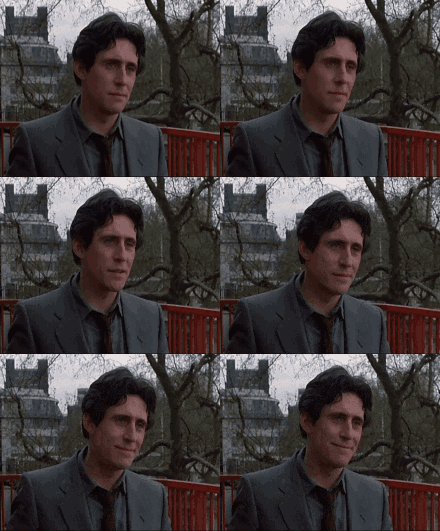
Gabriel Byrne as the Priest: A Skeptical Investigator Torn by Faith
Gabriel Byrne plays Father Andrew Kiernan, a Jesuit priest and former scientist sent by the Vatican to debunk miracles.
He’s a miracle-buster—rational, conflicted, haunted by his own doubts. Byrne brings quiet intensity:
his soft Irish accent, piercing eyes, and measured calm make Kiernan compelling.
As he investigates Frankie, he uncovers the Church’s cover-up and begins to question his role.
His arc—from skeptic to believer—feels earned; Byrne’s performance conveys a man
wrestling with faith, science, and the possibility of genuine divine intervention.
He’s not a traditional exorcist; he’s a man of reason facing the inexplicable.

Patricia Arquette’s Gorgeous Performance: Fragile Yet Fierce
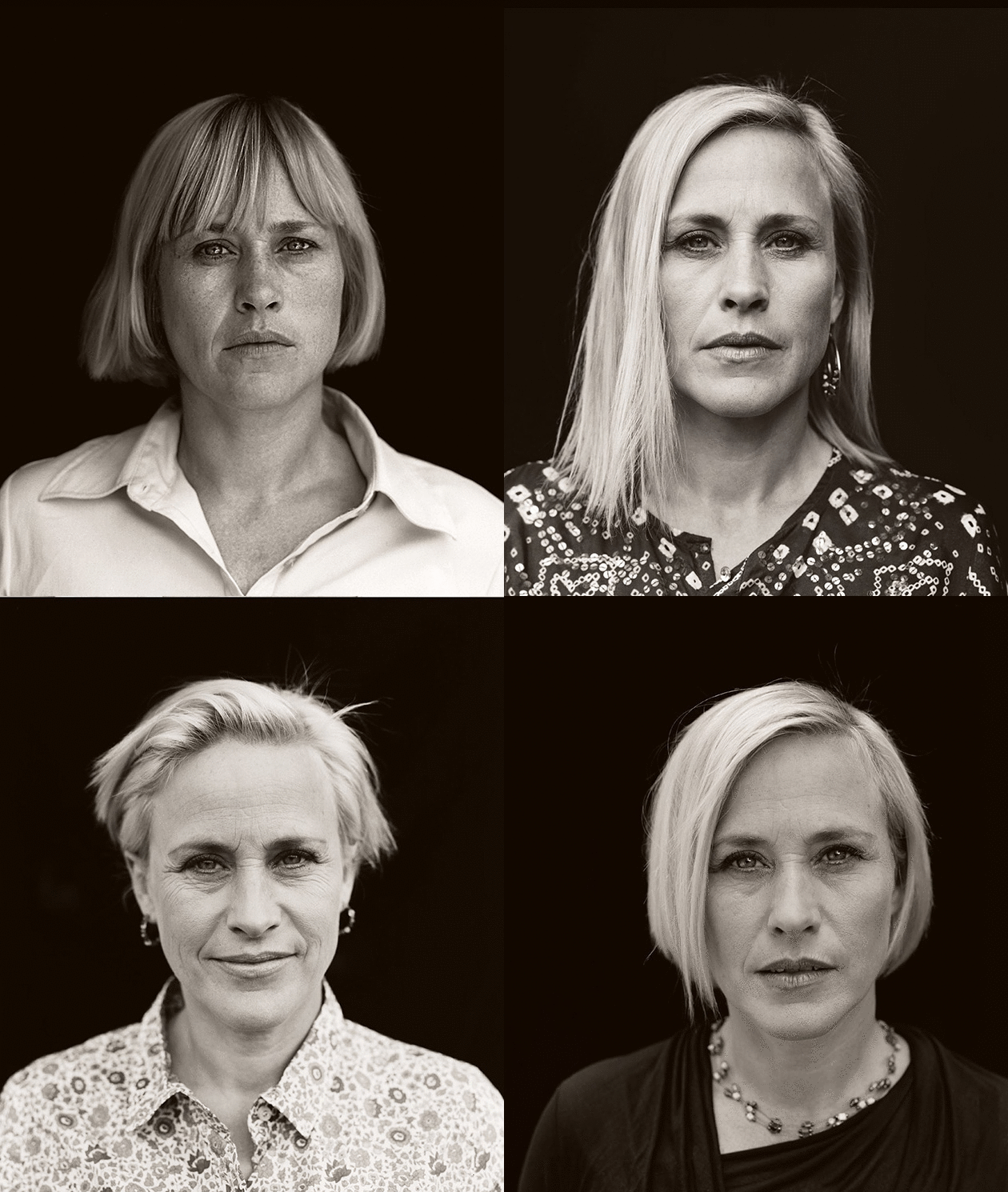
Patricia Arquette is stunning as Frankie—vibrant, rebellious, and achingly human.
Her beauty shines through the torment: wild hair, expressive eyes, a mix of punk edge and vulnerability.
As the stigmata attacks escalate—convulsions, bleeding wounds, levitation—Arquette sells the horror
with raw physicality and emotional depth.
She’s not just a victim; she’s defiant, angry, and ultimately the vessel for a message of inner divinity.
Arquette’s charisma makes Frankie compelling: a party girl turned unwilling saint, her suffering feels real and her strength inspiring.
Elia Cmiral’s score (with contributions from Billy Corgan) adds eerie atmosphere
haunting choirs, pulsing rhythms—while the visuals (fast cuts, religious iconography, blood-soaked montages) create a feverish tone.
Stigmata is flawed—over-the-top effects, heavy-handed conspiracy—but its religious depth, Byrne’s conflicted priest,
and Arquette’s gorgeous, tormented performance make it a haunting meditation on faith, power, and the divine in the modern world.
Stigmata captivates me because of its religious mystery, Byrne’s tormented priest,
and Arquette’s radiant suffering echo your fascination with faith, horror,
and human endurance on dieulois.com.
with help of Google Gemini
< B > My Personal Blog < B > List of all my Blog posts < B >
Article generated & inserted in SQL tables by AIs

FREDDY FRANCE Blog personnel
(c)FPe COPYRIGHT @FPDIEULOIS 2026